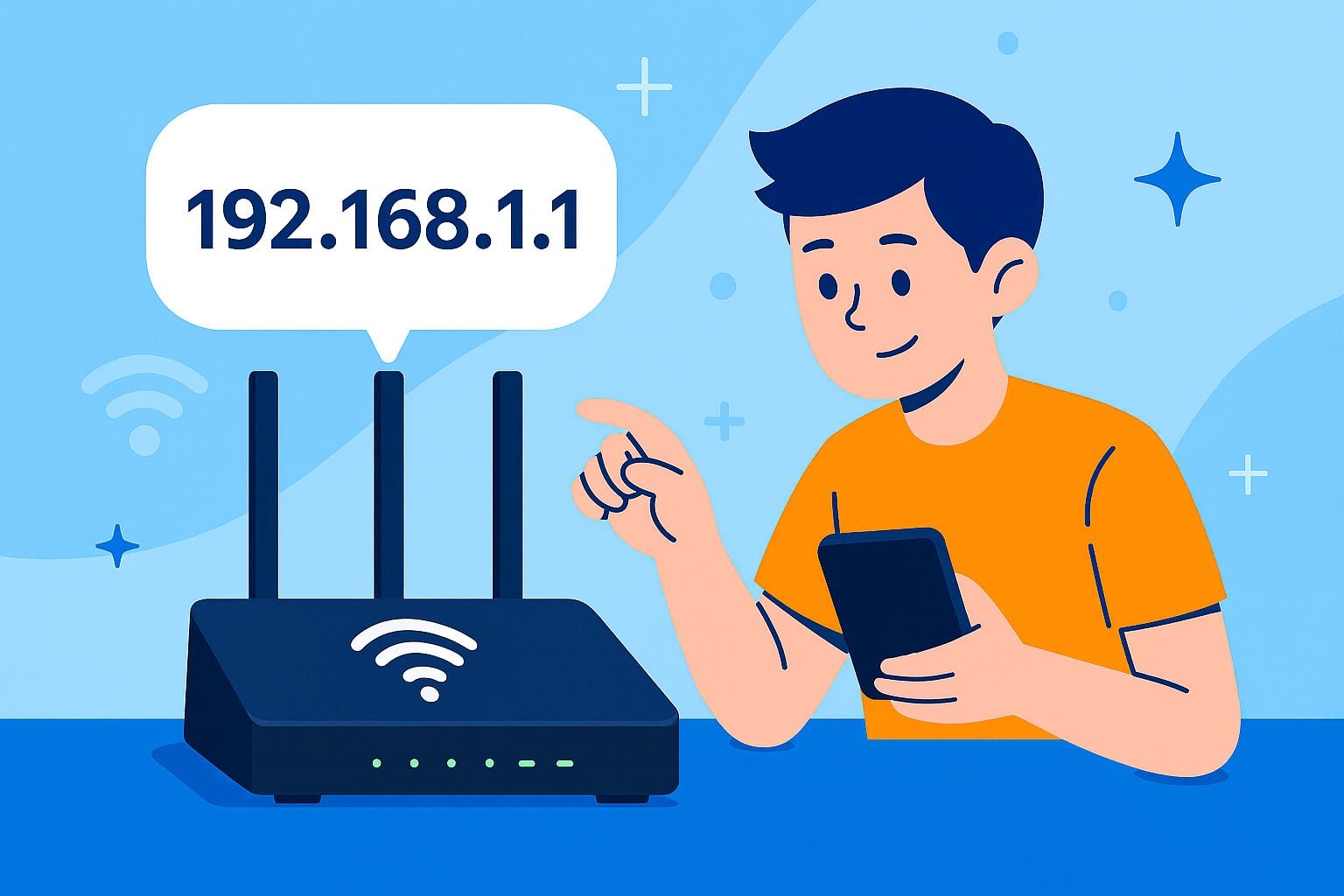
Navigating the world of home networking can sometimes feel like deciphering a secret code. Among the most common stumbling blocks users encounter when trying to access their router's settings is a subtle yet significant typographical error: typing 192.168.l.0.1 instead of the correct IP address. This seemingly minor mistake can lead to frustrating "page not found" errors and prevent you from configuring your network as desired. Understanding this common pitfall, and how to correctly identify and use your router's IP address, is crucial for anyone looking to manage their WiFi, enhance security, or troubleshoot connectivity issues.
The quest to access your router often begins with a web browser and an IP address. For many, this IP is a private address within the 192.168.x.x range, designated for local network communication. However, the mistaken inclusion of a lowercase 'L' where a '1' should be (as in Https //192 L.168.1.1 or 192.168.l.0.1) is a surprisingly prevalent error that prevents users from reaching their router's administration panel.
Understanding the 192.168.l.0.1 Confusion
The "Lowercase L" Dilemma
The core of the problem lies in a simple yet critical misinterpretation: the character 'l' (lowercase L) being confused with '1' (the numeral one). When users attempt to access their router by typing https://192.168.l.0.1 into their browser, they are unknowingly entering an invalid IP address. An IP address, by definition, consists solely of numerals and periods. The presence of any alphabetic character, even a single 'l', renders the address unreadable to network protocols. This is why you'll consistently receive an error message, often something like "This site can't be reached" or "ERR_ADDRESS_UNREACHABLE," leaving you wondering why you can't access your router settings.
This common typo is particularly frustrating because the correct addresses, such as 192.168.0.1 or 192.168.1.1, are frequently used as default login gateways by countless router manufacturers. The visual similarity between 'l' and '1' on a keyboard, especially in different fonts, makes this an easy mistake to overlook. Therefore, the first step in troubleshooting any router access issue is always to double-check that you've typed the IP address correctly, ensuring all characters are indeed numerals.
What is an IP Address (and Why These are Private)?
An IP address (Internet Protocol address) is a unique numerical label assigned to every device connected to a computer network that uses the Internet Protocol for communication. Think of it as your device's mailing address on a network. IP addresses like 192.168.0.1, 192.168.1.1, and 192.168.188.1 belong to a special range of "private IP addresses." These addresses are specifically reserved for use within private networks, such as your home or office LAN, and are not directly routable on the public internet. This design provides a layer of security and allows multiple private networks to exist without conflicting with public IP addresses.
Your router acts as the default gateway for your private network. When your computer or smartphone wants to send data to the internet, it first sends it to the router's private IP address. The router then uses its public IP address (assigned by your Internet Service Provider) to communicate with the wider internet. Accessing the router's private IP address allows you to log into its web-based administrative interface, where you can configure the internal workings of your local network.
Identifying Your Router's Correct IP Address
The Most Common Default Gateway IPs
While the typo Https //192 L.168.1.1 points to a non-existent address, various valid private IP addresses are widely used by router manufacturers as their default login IPs. The two most ubiquitous are 192.168.0.1 and 192.168.1.1. These are default for a vast array of brands:
- 192.168.1.1: Often used by Linksys, TP-Link, ASUS, D-Link, Netgear (older models), and many others.
- 192.168.0.1: Common for older D-Link, Netgear, and some TP-Link models. Many internet service providers (ISPs) that provide their own routers also use this.
Beyond these, other addresses exist, though they are less common. For instance, the reference context mentions 192.168.188.1 as a default for specific brands like Wavlink and Wiwafifa range extenders. Other possibilities include 192.168.2.1, 192.168.10.1, or even 10.0.0.1 (common for Xfinity/Comcast routers). The specific IP address your router uses depends entirely on its manufacturer and model, or if your ISP has pre-configured it.
Methods to Discover Your Router's IP
Before you can log in, you need to be certain of the correct IP. Here are the most reliable ways to find it:
- Check the Router Label: The easiest method is often overlooked. Most routers have a sticker on the bottom or side, listing the default login IP address, along with the default username and password. This is typically the most accurate source of information.
- Consult Router Documentation/Manual: If you've kept the physical manual that came with your router, it will clearly state the default IP and login credentials. Digital manuals are also usually available on the manufacturer's website.
- Using Command Prompt (Windows):
- Press
Windows Key + R, typecmd, and pressEnterto open the Command Prompt. - Type
ipconfigand pressEnter. - Look for the "Default Gateway" under your active network connection (e.g., Ethernet adapter or Wireless LAN adapter). The address listed there is your router's IP.
- Press
- Using Terminal (macOS/Linux):
- Open Terminal (Applications > Utilities > Terminal on macOS).
- For macOS, type
netstat -nr | grep defaultorip route get 1.1.1.1 | awk '{print $3; exit}'. The IP listed as 'gateway' or 'default' is your router's IP. - For Linux, type
ip route | grep default. The address following 'default via' is your router's IP.
- Online Search: If all else fails, a quick online search for "[Your Router Brand] [Your Router Model] default IP" will often yield the answer. Remember to be specific with your router's model number for the best results.
Step-by-Step Guide to Accessing Your Router's Admin Panel
Before You Begin: Ensure Connectivity
To access your router's settings, your device must be connected to its network. For the most stable connection and to avoid potential WiFi issues, it's highly recommended to connect your computer directly to the router using an Ethernet cable. If that's not possible, ensure your device is securely connected to the correct WiFi network broadcast by the router you intend to configure. Attempting to log in while connected to a different network (e.g., a neighbor's WiFi or mobile data) will prevent access.
Entering the Correct IP Address
Once you have identified your router's correct IP address (e.g., 192.168.0.1, 192.168.1.1, or 192.168.188.1):
- Open your preferred web browser (Chrome, Firefox, Edge, Safari, etc.).
- Type the correct IP address into the address bar at the top of the browser window. For example, type
192.168.0.1or192.168.1.1. - Crucially, avoid the typo Https //192 L.168.1.1. Double-check that all characters are numerals. You usually don't need to type
http://orhttps://; most browsers will automatically add the correct protocol. - Press
Enter.
If the IP address is correct and your connection is valid, you will be redirected to your router's login page.
Logging In with Credentials
Upon reaching the login page, you'll be prompted for a username and password. This is where many users hit another common hurdle:
- Enter the default username and password. Common default combinations include:
- Username:
admin, Password:admin - Username:
admin, Password:password - Username:
admin, Password: (blank) - Username: (blank), Password:
admin
- Username:
- This information is almost always found on the router's sticker, in its manual, or via an online search for your specific router model's default credentials.
- Click the "Login" or "Sign In" button.
Immediate Action: Change Default Credentials! If you successfully log in using default credentials, it is paramount that you change them immediately. Default login details are widely known and pose a significant security risk, allowing unauthorized access to your network. Create a strong, unique password for your router's admin panel. For more in-depth guidance on securing your router, including changing WiFi passwords, refer to Master Router Settings: Secure WiFi Password & Admin Access.
Navigating the Admin Interface
After logging in, you'll be presented with your router's administration dashboard. The layout and terminology vary significantly between manufacturers, but most interfaces will have sections for:
- Wireless Settings: To change your WiFi name (SSID) and password.
- Network/LAN Settings: For IP address configurations, DHCP server settings.
- Advanced Settings: For port forwarding, Quality of Service (QoS), VPN settings.
- System/Administration: For firmware updates, password changes for the admin panel, rebooting the router.
Leveraging Your Router's Admin Panel for Optimal Network Performance and Security
Essential Router Settings You Can Change
Accessing your router's admin panel unlocks a powerful suite of controls that go far beyond merely getting online. Here are some of the most critical settings you can manage:
- Changing WiFi Name (SSID) and Password: This is fundamental for personalizing your network and, more importantly, securing it. A strong, unique WiFi password prevents unauthorized users from connecting to your network and potentially accessing your data.
- Firmware Updates: Routers, like any other computing device, run on software (firmware). Manufacturers regularly release updates to fix bugs, improve performance, and patch security vulnerabilities. Regularly checking for and installing firmware updates is a vital security practice.
- Parental Controls: Many modern routers offer robust parental control features, allowing you to block specific websites, set internet access schedules for certain devices, or filter content to ensure a safe online environment for children.
- Quality of Service (QoS): If you experience lag during online gaming or video calls, QoS settings can help. This feature allows you to prioritize network traffic for specific applications or devices, ensuring critical data gets preferential treatment.
- Port Forwarding: Essential for certain online games, security camera systems, or running servers from your home network. Port forwarding directs incoming internet traffic to a specific device on your local network.
- Guest Network Setup: Create a separate WiFi network for guests. This keeps your main network password private and isolates guest devices from your primary network resources, enhancing security.
Exploring these settings can significantly enhance both the performance and security of your home network. For a detailed walkthrough on what you can achieve once inside, check out 192.168.0.1: Your Router Admin Login Guide, which provides comprehensive advice for one of the most common default IPs.
Troubleshooting Common Access Issues (Beyond the Typo)
Even with the correct IP and password, you might encounter other issues:
- No Login Page Appears:
- Incorrect IP: Double-check the IP using the methods above.
- Network Connectivity: Ensure your device is connected to the router's network. Try restarting your router and device.
- IP Conflict: Rarely, another device might be using the same IP. A router reboot usually resolves this.
- Login Failure:
- Wrong Credentials: Re-verify the username/password. Check for Caps Lock.
- Changed Defaults: If someone else configured the router, they might have changed the default credentials.
- Router Reset: As a last resort, a factory reset button on the router (usually a small pinhole button you hold for 10-30 seconds) will revert all settings, including login credentials, to factory defaults. Be warned, this will erase all custom configurations!
- Browser Issues:
- Try clearing your browser's cache and cookies.
- Attempt to access the page using a different web browser.
- Temporarily disable any browser extensions or VPNs that might interfere.
Conclusion
The journey to managing your home network effectively often begins with correctly accessing your router's admin panel. The pervasive confusion around 192.168.l.0.1 highlights a common human error, mistaking a lowercase 'L' for the numeral '1'. By understanding that this is an invalid address and knowing how to find your router's actual IP (like 192.168.0.1 or 192.168.1.1), you can overcome this initial hurdle. Once inside the administration interface, you gain the power to customize your network, boost its performance, and, most importantly, secure it against potential threats. Always remember to prioritize changing default credentials and keeping your router's firmware updated to ensure a robust and safe online experience.